Pros and Cons: Social Media and Elections

Click image to view full size.
Last Updated on December 26, 2025 by Hannah Seeley
Elections are a cornerstone of organizational decision-making, shaping leadership and guiding important initiatives. As member expectations and communication habits evolve, organizations are seeking innovative ways to connect with their communities and ensure fair, inclusive participation. Social media, with its dynamic features and widespread adoption, offers new opportunities to reimagine how organizations conduct elections.
How Does Social Media Affect Elections and Campaigns?
In the last few decades, social media has transformed the very nature of elections and campaigns, offering a place for news, discourse, and election information. As a result, social media now holds significant potential to influence election participation, regardless of the election’s size or scope.
One of the most significant ways social media can impact elections and campaigns is by affecting public perceptions about candidates. Social media is very direct, allowing candidates to respond to each other and letting voters interact with candidates in new ways. Whereas candidates would previously typically only directly respond to one another during in-person debates, we can now see real-time interactions as new issues arise.
Businesses and organizations such as local clubs, unions, homeowners associations (HOAs), credit unions, and universities can also leverage social media to encourage voters to learn more about the candidates and the issues at stake. For large organizations, where some members or workers may not be familiar with the candidates, this can be especially beneficial.
The Impact of Social Media on Elections and Voting
One of the biggest benefits of using social media for member elections is the ability to increase participation and engagement. When organizations share election details – such as timelines, candidate information, and how to cast a ballot – members can feel more connected to the process and more confident about participating.
The interactive, community-driven nature of social media also helps members feel involved. People often use these platforms to discuss their perspectives, highlight issues that matter to their organization, or show support for candidates. Even something as simple as sharing an “I voted” image can remind fellow members to submit their ballots and foster a positive culture around participation.
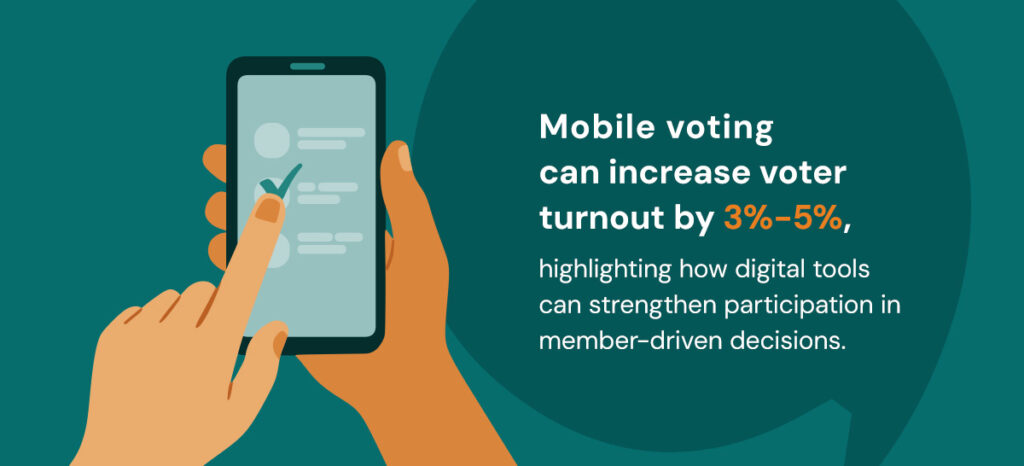
You can even use social platforms to promote online voting tools themselves. Convenient options like mobile voting can increase voter turnout by 3% to 5%, highlighting how digital tools can strengthen participation in member-driven decisions.
However, there is another side to social media’s impact. More than 85% of adults across the country rely on a computer, tablet, or smartphone to gather news, at least occasionally. Additionally, more than half of adults report relying on these sources often. Nearly 40% of Americans report getting news from Facebook, and smaller shares report using platforms like TikTok and Instagram. This means that while social media can increase voter turnout and engagement, it can also facilitate the easy spread of misinformation.
The Positive and Negative Effects of Social Media on Politics
Social media and elections can go hand in hand with the right precautions and a thorough understanding of the pros and cons. As with traditional election methods and tools, effectively integrating social media into the process involves weighing the benefits and potential drawbacks.
The Benefits of Leveraging Social Media for Elections
Embracing digital platforms enables organizations to cultivate a more connected, informed, and engaged member community. From boosting participation to gathering valuable feedback, social media makes the election process more accessible and transparent. Take a look at the benefits of leveraging these tools:
- Encouraging participation: Social media can make it easier for organizations to reach members where they already spend time online, helping to boost participation. Posting reminders, sharing candidate profiles, and highlighting the importance of voting can motivate more people to get involved with the process. Interactive features like polls, Q&A sessions, or event pages can further engage members, making the election process feel accessible and relevant. This increased visibility and boosted convenience can lead to higher turnout and a more representative outcome.
- Educating voters: Social platforms are powerful tools for educating voters about the election process, candidates, and key issues. Organizations can share detailed posts and videos explaining how to cast votes, what positions are up for election, and where voters can learn more about each candidate. This format is easily digestible and shareable, making it easier for members to understand their choices, make informed decisions, and engage in discussions with others.
- Soliciting feedback: Organizations can also leverage social media to quickly gather feedback from members. Comments, direct messages, surveys, and polls can help leaders gauge public opinions. This two-way communication fosters a sense of inclusion and transparency, as members feel that their voices are valued and important. Gathering feedback can also help organizations identify concerns or areas for improvement, enabling them to address issues proactively and build trust.
- Giving real-time updates: A standout benefit of social media is the ability to provide real-time updates throughout the election process. Organizations can instantly notify members of important dates, process changes, or unexpected issues. On election day, live updates can keep everyone informed about turnout and preliminary results. This transparent and efficient process helps reduce confusion and allows leaders to respond to questions or concerns as soon as they arise.
- Reducing costs: Another notable benefit for organizations is reducing the costs associated with printed election materials. Organizations can reduce or eliminate the use of traditional flyers, special letters, and candidate posters when leveraging social media. Most social platforms are free to use, and you can easily distribute digital content at minimal cost. For organizations with limited budgets, this cost-effectiveness is a significant advantage.
The Possible Downside You Need to Be Aware Of
While social media offers many advantages for modernizing elections, it’s important to recognize that these platforms also introduce new challenges. The digital landscape is constantly evolving, and organizations must be aware of possible downsides, such as:
- Bylaw restrictions: Some organizations will have specific requirements or restrictions around social media posting or how to conduct elections. Read your organization’s bylaws carefully and be cautious around campaigning rules. Ignoring bylaw restrictions can lead to disputes or legal complications, making it essential to update bylaws or obtain proper approvals before posting election-specific materials.
- Platform-specific requirements: Each social media platform has its own set of rules you must follow. While organization-run elections may not have the same limitations as political elections, you must still adhere to the platform’s guidelines. For example, some platforms may limit group sizes or restrict certain content creation. Additionally, platform changes can occur with little to no notice, potentially disrupting election activities.
- Moderation needs: The open nature of social media means you’ll want to keep an eye on the conversation happening. Organizations must prepare to actively moderate discussions to prevent the spread of misinformation, harassment, or off-topic debates. You must outline clear, specific guidelines and maintain a consistent enforcement process to ensure a productive, respectful election environment.
- Security considerations: While social media can be a useful way to share election information, organizations must ensure that ballot access remains secure and restricted to verified members only. Public posts should never compromise the integrity of the election. Use secure methods like embedded login links or Single Sign-On (SSO) to direct members to their personalized ballots, ensuring that only eligible voters can participate and that election confidentiality is preserved.
Boost Your Election Turnout With the Right Technology
Want to Learn More? Check Out These Articles:
- Social Media & Your Elections
- How to Create a Social Media Policy for Your Member Organization
- Election Marketing 101: Turning Your Members Into Voters

Since joining SBS in 2011, Tony has led company communications, branding, and product launches, maintaining SBS as the go-to for governance solutions. He regularly hosts educational webinars and speaks at national trade association events across the United States. Tony’s expertise has earned him media recognition, with features in outlets like Rural Electric Magazine, The Association Adviser podcast, Associations Now, and NBC’s King 5 Mornings in Seattle.